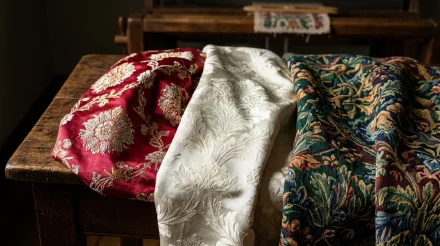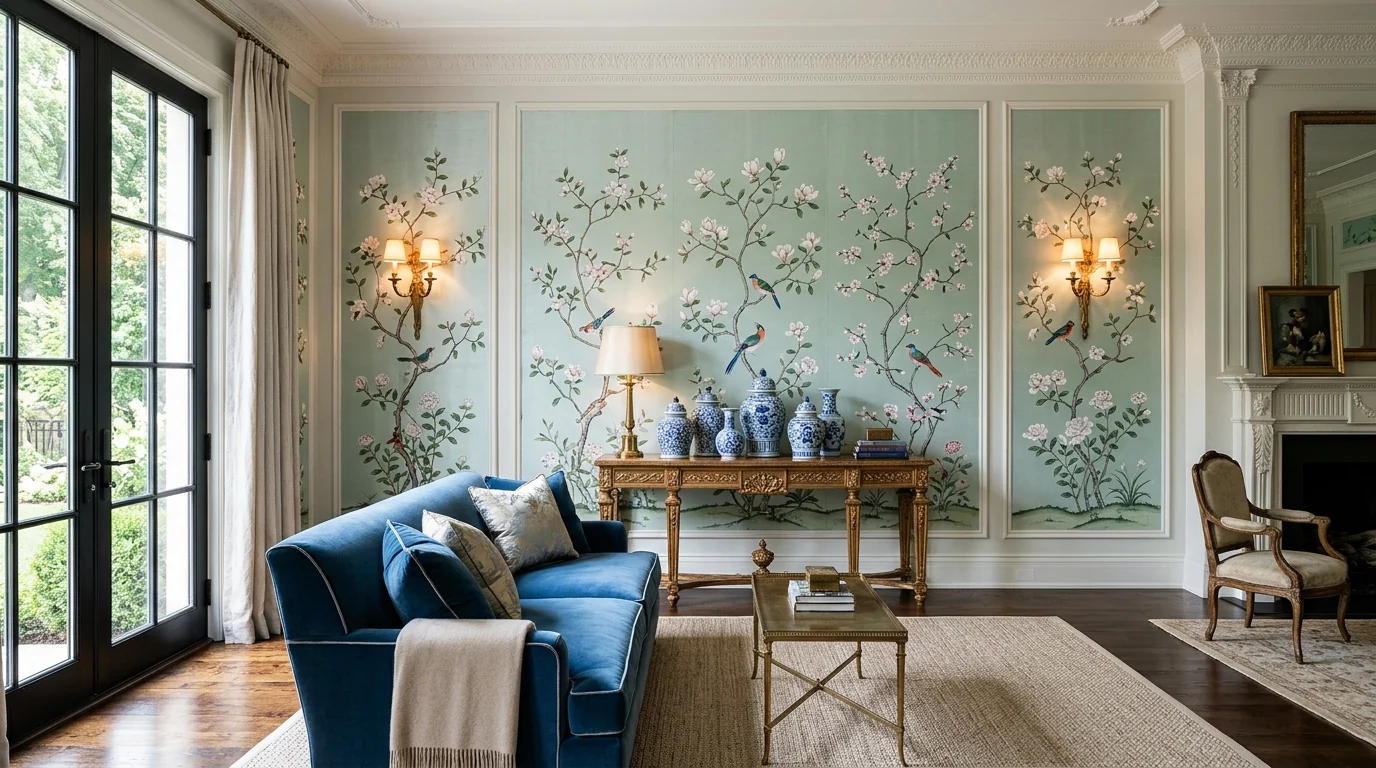

Chinoiserie interior design is a decorative arts tradition born in seventeenth- and eighteenth-century Europe that interprets East Asian motifs—hand-painted botanical murals, blue-and-white porcelain, pagoda silhouettes, lacquerware, and faux-bamboo fretwork—through Western architectural proportions. Today, designers pair single high-craft statement pieces with clean contemporary upholstery so rooms feel luminous and curated rather than theatrical.
Key Takeaways
- Definition: Chinoiserie (from French chinois) blends European Rococo and Neoclassical symmetry with idealized Chinese garden scenes, avian murals, and glazed ceramics.
- Modern 70/30 Balance: Anchor 70% of a room in quiet neutral linen, oak, or plaster, dedicating 30% to chinoiserie interior design accents such as silk panels or ginger jars.
- Signature Materials: Hand-painted silk or tea-paper wallcoverings, cobalt-and-kaolin porcelain, cinnabar or black lacquer, and Chippendale fretwork define authentic rooms.
- Lighting & Scale: Pair intricate wall murals with unadorned solid-velvet seating and warm 2700K brass sconces to prevent visual clutter.
Table of Contents
1. What Defines Authentic Chinoiserie Interior Design?
At its core, chinoiserie interior design celebrates asymmetrical natural beauty framed within structured architectural rooms. As maritime trade expanded between Canton and European ports during the late 1600s, aristocrats commissioned court cabinetmakers and fresco painters to build entire porcelain cabinets and silk-lined drawing rooms inspired by imported tea chests, silk scrolls, and export wares.
Unlike strict historical archaeology, the style evolved as an imaginative cross-cultural dialogue. British cabinetmaker Thomas Chippendale published lattice-backed “Chinese” chair designs in his 1754 Gentleman and Cabinet-Maker’s Director, while French Rococo masters integrated asymmetrical scholar rocks and phoenix motifs into gilded boiserie panels documented by The Metropolitan Museum of Art.
In contemporary homes, successful chinoiserie interior design avoids head-to-toe theme rooms. Instead, interior architects treat panoramic wallpaper or antique export ceramics as fine art, letting crisp plaster moldings, tailored wool rugs, and sculptural lighting create breathing room around ornate brushwork.
2. Choosing Hand-Painted Silk Wallpaper and Panoramic Murals
Panoramic botanical wallcoverings remain the single highest-impact investment in chinoiserie interior design. Traditional ateliers paint flowering plum branches, tree peonies, bamboo groves, and non-repeating songbirds onto dyed raw silk, metallic gold-leaf tea paper, or Xuan rice paper panels so no motif repeats across an entire dining room or foyer.
Scaling Murals in Chinoiserie Interior Design Rooms
Before ordering panels, measure chair-rail heights and window casing breaks carefully. In dining rooms with 9-to-10-foot ceilings, starting the painted garden trunk line just above a 34-inch wainscot keeps prized blossoms and perched pheasants at eye level rather than hidden behind buffet credenzas or dining chair backs.
Powder rooms and jewel-box libraries tolerate saturated grounds—mineral celadon, robin’s-egg blue, imperial ochre, or deep emerald. Open-plan living spaces benefit from parchment, pearl-gray, or raw-linen grounds framed inside picture-frame millwork panels, turning wallpaper into removable architectural triptychs that pair effortlessly with Japandi style interior design neutrals.
3. Styling Blue-and-White Porcelain and Ginger Jars
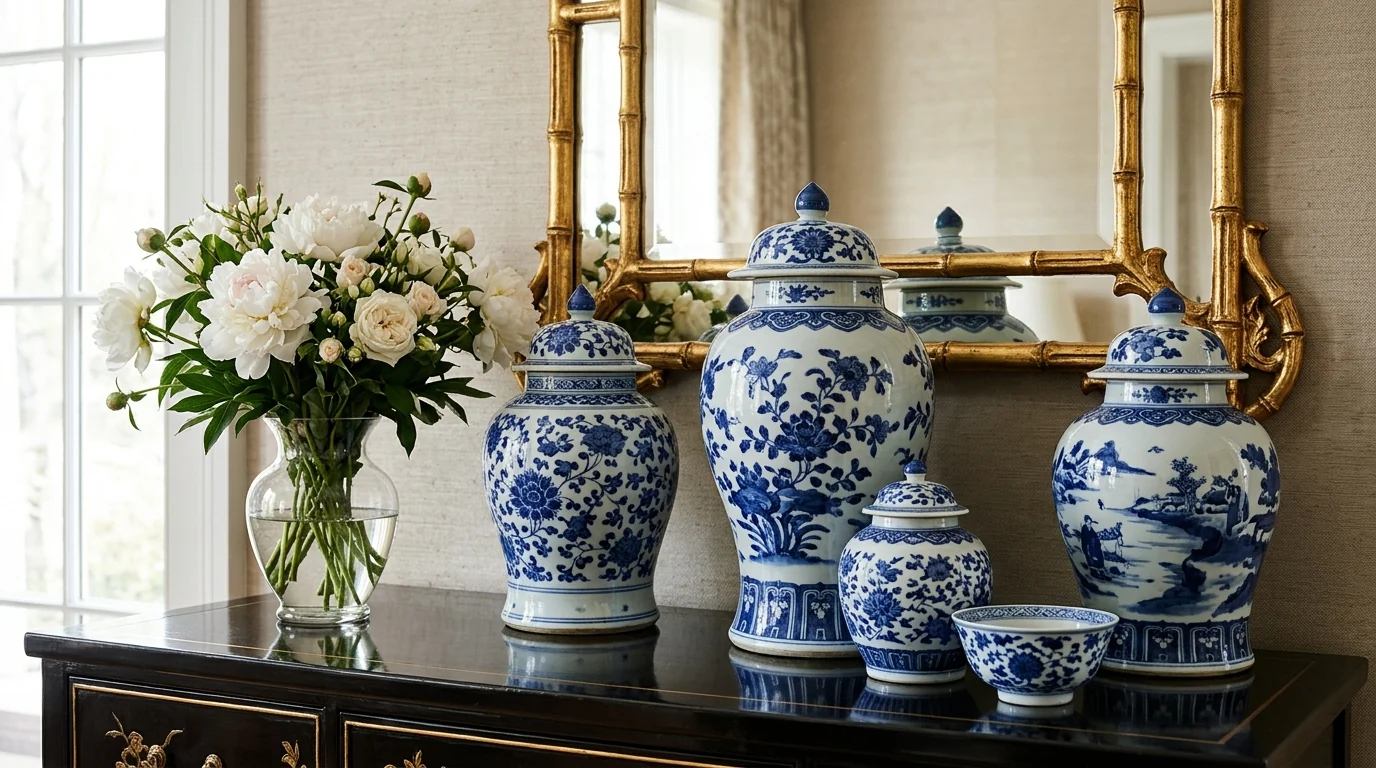
No element anchors chinoiserie interior design faster than cobalt-painted porcelain. Originally fired in Jingdezhen to transport spices, salt, and tea, lidded ginger jars, tulipieres, and melon-ribbed temple jars introduce glossy ceramic reflection against matte plaster walls and woven grasscloth.
Understanding glaze depth and cobalt brushwork elevates any collection. Exploring the history of Chinese porcelain from Tang celadon to Ming blue-and-white wares helps collectors distinguish crisp hand-drawn cobalt oxide strokes from flat transferware reproductions.
Use odd-numbered groupings on mantels or symmetrical pairs flanking a console mirror. Mix vessel silhouettes—pair a high-shouldered general’s jar beside a low lotus bowl and a hexagonal vase—so heights step naturally without looking like a uniform retail shelf.
4. Chinoiserie vs. Japandi vs. Traditional East Asian Interiors
Designers frequently contrast ornate European-Asian synthesis with minimalist philosophies. This reference chart clarifies how chinoiserie interior design differs in materials, ornament, and spatial mood:
| Design Dimension | Chinoiserie Interior Design | Japandi Interior Design | Classical Ming Scholar Studio |
|---|---|---|---|
| Historical Origin | 17th–18th century European court synthesis | Contemporary Nordic + Japanese wabi-sabi fusion | 14th–17th century Chinese literati architecture |
| Color Palette | Celadon, cobalt blue, cinnabar red, gilt, emerald | Warm oatmeal, charcoal, bleached oak, sage | Deep rosewood, limewash white, ink black, jade |
| Wall Treatments | Hand-painted silk bird-and-flower murals, moldings | Textured lime plaster, vertical wood slats | Plain white plaster with single hanging calligraphy scroll |
| Furniture Silhouettes | Faux-bamboo legs, pagoda etageres, lacquered chests | Low-profile ash, bouclé armchairs, clean joinery | Mortise-and-tenon huanghuali yoke-back chairs |
| Textiles & Upholstery | Cut silk velvet, fretwork embroidery, linen piping | Unbleached linen, raw wool, cotton canvas | Woven cane seats, silk brocade cushions |
| Focal Accessories | Paired ginger jars, gilt mirrors, Foo dog finials | Single handmade stoneware branch vessel | Scholar rocks, bronze incense burner, brush rest |
5. Lacquer Furniture, Faux-Bamboo, and Chippendale Fretwork
Structural woodwork provides geometric counterpoint to organic floral walls in chinoiserie interior design. Look for Brighton Pavilion faux-bamboo side tables, Greek-key or lattice Chippendale chair backs, and high-gloss Coromandel or black-lacquer chests accented with aged unlacquered brass hardware.
Limit carved bamboo or pagoda silhouettes to one or two pieces per room. Placing a pair of vintage gilt faux-bamboo armchairs opposite a crisp, modern track-arm sofa upholstered in rich jewel-toned fabric—referencing traditional silk velvet weaving—bridges eighteenth-century artistry with twenty-first-century comfort.
Archive collections at the Victoria and Albert Museum show how historic lacquer screens were often repurposed into commode doors. Today, hinging a four-panel painted folding screen behind a bedroom headboard delivers architectural height in rental or historic apartments without pasting wallpaper.
6. Color Palettes, Textiles, and Dramatic Lighting Ratios
Color discipline separates timeless chinoiserie interior design from visual overload. Pull three hues directly from your primary mural or ceramic piece: a serene ground shade (celadon, bone, or pale sky), an architectural contrast tone (indigo, espresso, or oxblood), and one metallic accent (burnished brass or antique silver leaf).
Repeat geometric trim sparingly on drapery leading edges or lumbar pillows. Subtle woven borders echoing historic chevron and geometric motifs sharpen soft botanical prints without competing against avian scenes.
Lighting should graze silk wallcoverings sideways rather than flooding rooms from recessed ceiling cans. Picture lights, pleated silk-shade table lamps, and candle sconces cast soft, directional highlights reminiscent of eighteenth-century English salon portraiture and subtle chiaroscuro and tenebrism shadow play.
7. Seven Practical Rules to Avoid Over-Decorating
- Pick one hero surface: Choose either panoramic chinoiserie wallpaper or bold patterned drapery—never both in the same sightline.
- Ground with natural fiber rugs: Jute, sisal, or undyed wool rugs quiet down high-shine lacquer and glazed porcelain.
- Mix modern art alongside historic motifs: Hang an abstract plaster relief or minimalist ink study opposite floral murals for gallery tension.
- Stick to solid primary upholstery: Cover sofas in solid linen, mohair, or velvet so decorative cushions carry the pattern.
- Honor wood warmth: Pair cool cobalt-and-white ceramics with warm walnut, burl wood, or honeyed oak surfaces.
- Edit small curios ruthlessly: Three large-scale temple jars read far cleaner than twelve miniature figurines.
- Upgrade hardware and shades: Swap generic chrome pulls for unlacquered brass backplates and top lamps with pleated silk shades.
8. Investment Budgeting, Paper-Backing & Humidity Care
Commissioning bespoke chinoiserie interior design wallcoverings requires careful substrate preparation before a paperhanger ever opens paste buckets. Authentic hand-painted silk panels typically measure 36 inches wide by 9 to 12 feet tall and carry a non-woven Xuan paper backing. Installing clay-free liner paper over primed Level-5 drywall prevents alkaline plaster burns from discoloring delicate mineral celadon or pearl silk dyes over decades.
In high-traffic foyers or humid powder rooms, specify strippable canvas backing so heirloom murals can be detached cleanly during future renovations and remounted in a new residence. Keep direct southwestern UV sunlight filtered through sheer linen Roman shades or UV-blocking window film, as natural botanical pigments and raw dyed silk mellow faster than synthetic vinyl prints.
When allocating room budgets, invest the largest share in one permanent focal element—custom framed mural panels, an antique Coromandel chest, or pair of wired temple-jar lamps—while saving on solid-colored wool area rugs, simple brass curtain rods, and neutral linen upholstery that allow your signature chinoiserie interior design pieces to shine effortlessly.
Frequently Asked Questions
Is chinoiserie interior design still in style for modern homes?
Yes. Contemporary chinoiserie interior design thrives as a counterbalance to stark minimalism, especially when designers pair one heirloom silk mural or lacquered console with clean-lined modern sofas, natural oak floors, and neutral linen drapery.
What is the difference between Chinese antiques and chinoiserie?
Authentic Chinese antiques were crafted in China for domestic or imperial use according to traditional Chinese iconography, whereas chinoiserie is a European decorative style started in the seventeenth century that reinterprets East Asian motifs onto Western furniture forms and architectural interiors.
Which wall paint colors go best with blue-and-white ginger jars?
Blue-and-white porcelain stands out against warm alabaster white, pale celadon green, muted chartreuse, soft French gray, deep navy lacquer, and warm terracotta-coral tones.
How can you add chinoiserie style on a budget without silk wallpaper?
Frame individual botanical tea-paper panels inside painted wood molding, group three vintage blue-and-white ginger jars on an entryway console, hang a thrifted faux-bamboo mirror finished in Rub ‘n Buff gilt wax, or add fretwork-trimmed linen throw pillows.