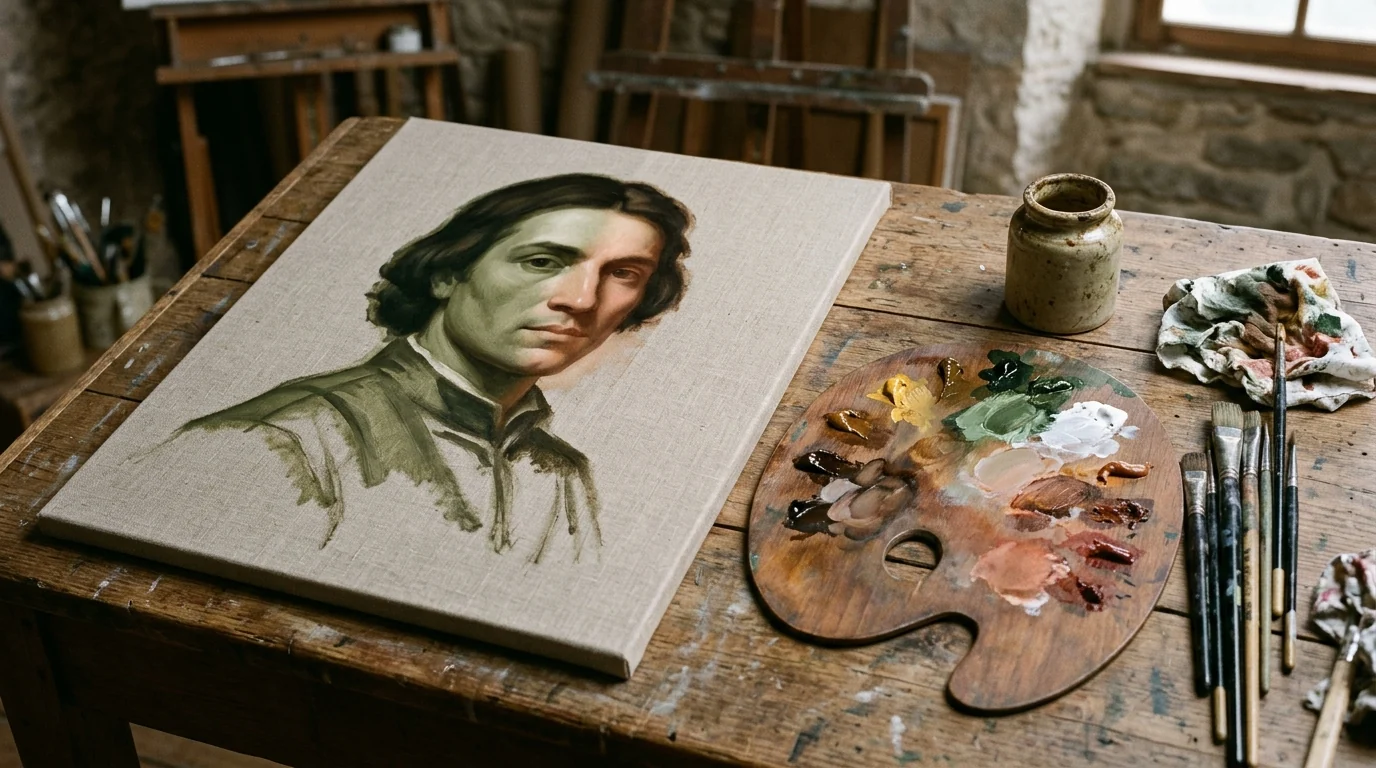

Verdaccio underpainting is a traditional Italian Renaissance tonal foundation mixed from muted olive-green earth pigments—historically yellow ochre, lamp or vine black, lead white, and a touch of cinnabar or red earth—painted beneath translucent warm flesh glazes so portraits achieve cool, lifelike shadow recession and optical depth that direct opaque mixing cannot replicate.
Key Takeaways
- Optical Color Science: Because warm rose and golden glazes are semi-transparent, an underlying cool olive verdaccio underpainting neutralizes chalkiness and mimics natural subcutaneous veins in shadow transitions.
- Cennino Cennini’s Recipe: Documented around 1400 in Il Libro dell’Arte using terra verde and ochre earths for tempera frescoes, then adapted into oil painting across Italy and Flanders.
- Three Classical Underlayers: Artists choose green-toned verdaccio for portraits, neutral-gray grisaille for sculptural drapery, or warm-brown brunaille/imprimatura for high-contrast Caravaggist drama.
- Fat-Over-Lean Rule: Keep the initial tonal dead-coloring lean and matte (turpentine or spike oil) so subsequent oil-rich glazes bond permanently without cracking.
Table of Contents
1. Why Renaissance Masters Painted Faces Olive-Green First
Visitors viewing unfinished panel paintings in Florence or London often wonder why fourteenth- and fifteenth-century Madonnas appear ghostly sage-green. In early egg tempera panels by Duccio and Giotto, the pink upper iron-oxide carnations wore thin over six centuries, exposing the intact green terra verde and verdaccio underpainting beneath.
Human skin is not a flat, opaque wall of peach paint; it is a multi-layered translucent membrane. Warm arterial blood suffuses illuminated cheeks, nose bridges, and ears, while recessed eye sockets, temples, jawlines, and neck turns scatter cool blue-green wavelengths.
When a painter lays thin rose madder, vermilion, and Naples yellow glazes over a dry olive-gray verdaccio underpainting—letting the cool green whisper through halftones untouched—light penetrates through the glaze, strikes the pale ground, and bounces back to the viewer’s eye with genuine inner luminosity, as analyzed by conservation scientists at The National Gallery in London.
2. Verdaccio vs. Grisaille vs. Brunaille: Classical Underpainting Comparison
European ateliers tailored monochrome underlayers (known in France as ébauche and in Flanders as doodverf or “dead-coloring”) to specific subjects and lighting goals:
| Underpainting Method | Core Pigment Mix | Color Temperature | Primary Optical Strength | Historical Masters & Best Use |
|---|---|---|---|---|
| Verdaccio | Yellow ochre + ivory/mars black + titanium/lead white (+ touch of red earth) | Cool muted olive-sage | Cancels orange muddiness; creates lifelike cool halftones in human skin | Cennino Cennini, Ghirlandaio, Bouguereau; portraiture & figurative flesh |
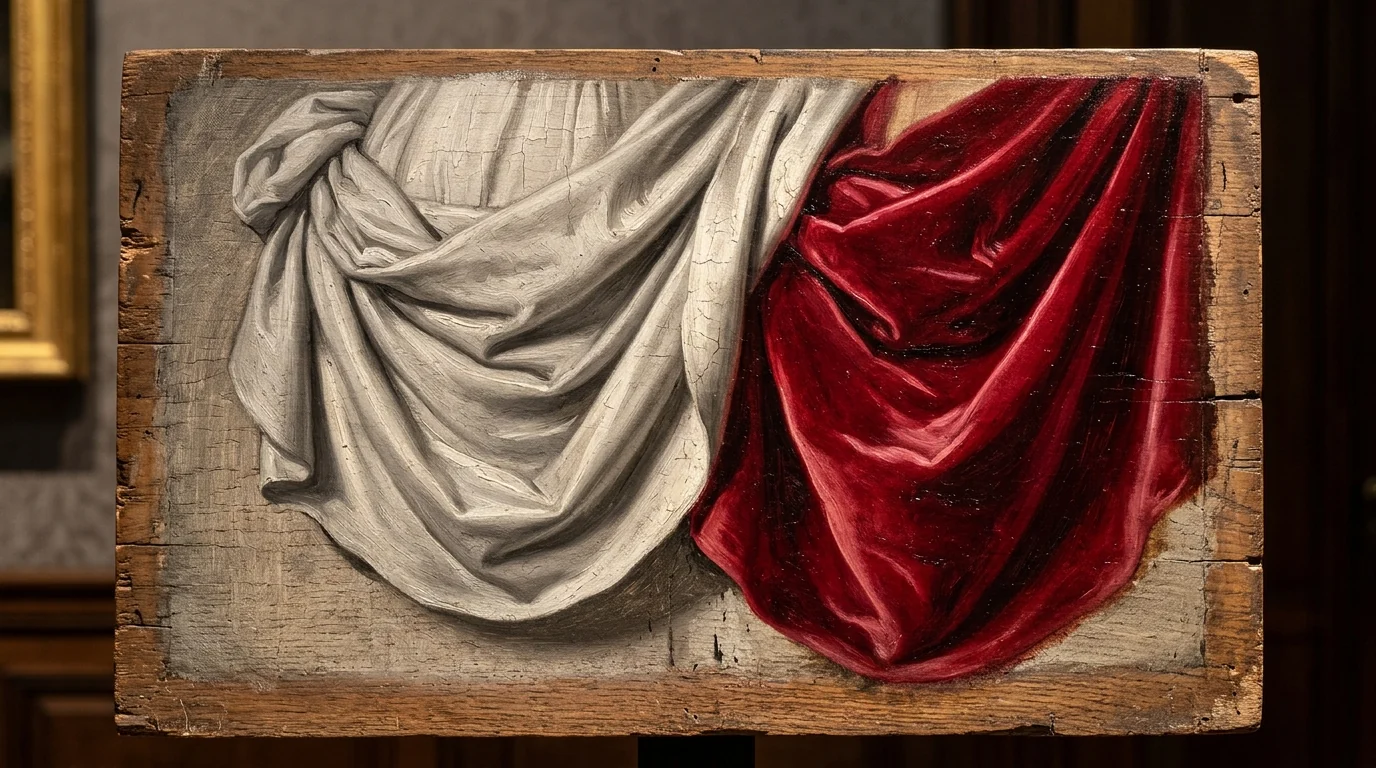
| Grisaille | Flake/titanium white + bone/ivory black (or raw umber + ultramarine) | Neutral to cool stone gray | Locks in sculptural 3D value reliefs like carved marble before color glazing | Jan van Eyck, Ingres, Rubens (oil sketches); complex silk & velvet drapery |
| Brunaille (Bistre) | Raw umber, burnt umber, or Cassel earth + lead white wipe-outs | Warm earth brown | Accelerates deep shadow massing and dramatic spotlight transitions | Caravaggio, Rembrandt, Velázquez; Baroque tenebrism |
| Terra Verde | Natural green earth pigment + white | Transparent celadon green | Subtle low-tinting cool shadow base for egg tempera panels | Duccio, Fra Angelico, Botticelli; early Italian panel portraits |
3. Mixing an Authentic Oil Verdaccio Underpainting Palette Today
Contrary to modern myth, historical verdaccio was rarely mixed from bright phthalo or viridian green. In Chapter 67 of Il Libro dell’Arte, Cennino Cennini describes combining dark ochre, white, black, and a tiny pinch of red cinnabar to yield a subtle, earthy gray-olive—essentially the classic Zorn-palette green created when carbon black cools yellow ochre.
Step-by-Step Verdaccio Underpainting Pigment Ratio
To mix a fast-drying, archivable verdaccio string on your studio palette today without toxic lead pigments, combine:
- 2 parts Yellow Ochre (provides warm golden body and fast siccative drying),
- 1 part Ivory Black or Mars Black (shifts yellow ochre immediately into muted olive green; Mars Black dries overnight!),
- 1/4 part Venetian Red or Burnt Sienna (tames overly acidic green into natural sage-gray),
- Graduated Titanium-Zinc White to step out a 5-value string from dark shadow olive (#2 value) up to pale greenish-ivory highlight (#8 value).
Thin the mixture only with odorless mineral spirits or rectified turpentine for the first pass. Just as expressive gesture lines and plumb-line proportions anchor fashion illustration, solving 100% of your drawing accuracy and light-to-shadow value hierarchy in monochrome first frees your mind to focus purely on color temperature during glazing.
4. Five Stages from Dead-Coloring to Luminous Baroque Flesh
Whether studying Thomas Gainsborough’s feathery eighteenth-century brushwork or the spotlighted drama of Caravaggio and Artemisia Gentileschi’s tenebrism, indirect oil painting follows five disciplined stages preserved in Metropolitan Museum studies of European oil painting:
- Toned Imprimatura: Stain white oil-primed linen with a transparent wash of raw umber so bright highlights register immediately against a mid-tone ground.
- Sculptural Value Block-In: Model the skull planes, brow ridge, zygomatic arch, and neck cylinder in lean verdaccio, pitching values roughly one step lighter than final target depth because glazes darken values.
- Dry Cure & Oiling Out: Let the lean earth layer dry completely to the touch (24–72 hours with umber/Mars black), then rub an ultra-thin Whisper coat of walnut or linseed oil wiped nearly dry with lint-free linen.
- Warm Carnation Glazes & Scumbles: Float transparent alizarin/quinacridone rose and yellow lake over warm vascular zones (cheeks, nose, ears), scumbling semi-opaque peach-lead-white equivalents onto lit forehead and cheekbone planes while leaving raw verdaccio partially exposed in cool temple and jaw turning halftones.
- Impasto Specular Accents & Rich Drapery Glazes: Finish with crisp loaded highlights on the tear duct, lower lip, and nose tip, pairing luminous skin against deep madder or glazed crimson velvet drapery modeled over grisaille.
Even contemporary digital portrait painters and artists exploring how traditional craft distinguishes human painting from AI-generated imagery replicate verdaccio in Procreate or Photoshop using a muted sage-green base layer beneath Multiply and Overlay glaze layers.
5. Lightfast Pigments, Brush Choices & Preventing Sunken-In Glazes
Executing a museum-permanent verdaccio underpainting starts with ASTM Lightfastness I earth pigments milled in cold-pressed linseed or walnut oil. Natural Cyprus Raw Umber (PBr7), French Yellow Ochre (PY43), Oxide of Chromium (PG17) or Terre Verte (PG23), and Mars Black (PBk11) catalyze oxidation naturally, allowing thin dead-coloring layers to cure tack-free overnight without toxic cobalt driers.
Brush architecture shapes optical transitions between stages. Scrub initial olive shadow masses into the canvas tooth with stiff hog-bristle filberts so shadows stay atmospheric, lean, and transparent; switch to soft mongoose, synthetic sable, or badger-hair blenders when floating delicate rose, gold ochre, and vermilion flesh glazes across dry cheek and forehead planes.
If upper portrait glazes dry dull or “sunken in” where oil absorbed unevenly into porous areas of your verdaccio underpainting, avoid piling on heavy dammar varnish mid-painting. Instead, wait forty-eight hours, rub a microscopic Couch coat of refined walnut oil mixed with two drops of Venice turpentine over the matte patch, wipe away all surface shine with a lint-free cotton rag, and resume glazing with effortless crystal clarity.
Frequently Asked Questions
Should a verdaccio underpainting be lighter or darker than the final painting?
Paint your verdaccio underpainting roughly 10% to 20% lighter in value than the finished portrait, because every transparent oil glaze acts like sunglasses—absorbing light and lowering overall value depth.
Can you do a verdaccio underpainting in acrylics beneath oil glazes?
Yes. Applying a matte acrylic verdaccio underpainting on acrylic-gessoed canvas or panel adheres safely beneath oil glazes, dries in thirty minutes, and obeys archival fat-over-lean flexibility rules—just never apply acrylics on top of oil paint.
Does verdaccio work for all human skin tones, from very fair to deep complexions?
Absolutely. Adjusting the olive value range—from pale celadon-ochre for fair complexions to rich raw-umber-and-chromium-oxide olive for deep melanated skin—creates realistic cool halftone transitions beneath warm burnt sienna, gold ochre, and crimson glazes across every complexion.
What is the difference between grisaille and en camaïeu?
Grisaille strictly uses neutral gray shades (from French gris), whereas en camaïeu denotes a monochromatic tonal painting executed in shades of another single hue such as warm brown (brunaille), rose pink, or golden ochre.